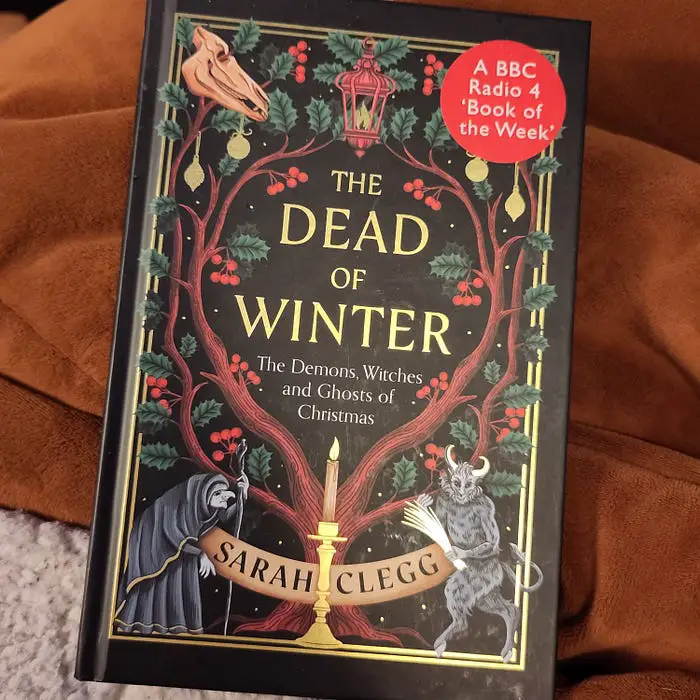
I was inspired to write this post at the beginning of November, watching the post Halloween despair sweep it’s way across my social media feeds. Christmas creep has come for us, and now everything is covered in twinkly lights, unsettling nutcracker statues, and exhortations to shop your way to happiness the moment the ghosts and skeletons come down on November 1st. I genuinely, unironically love Christmas, although I do find the hyper-capitalist aspects of it nauseating, but the advent of the season of sparkly, consumerist happiness doesn’t have to mean the end of spooky season. In fact, if we’re taking a traditionalist approach to this time of year, the bleak midwinter is actually when spooky season reaches it’s zenith. It’s time to explore the gothic history of Yule time horror, and the terrifying spirits of Christmas past.
Gothic Christmas has less to do with Christmas itself and everything to do with the time of year we celebrate it. There’s a reason most cultures have winter festivals featuring fire and light, and its because up until very very recently winter itself was the biggest monster humans had to face. Even amidst all the technological advantages of the industrial revolution the cold weather, influx of diseases, and reduced access to nutritious food were major killers every year — still are, in fact, in more extreme climate zones and areas impacted by poverty. There’s a reason Halloween falls on 30th October, the end of the harvest up in the North, and the beginning of the season of death; it’s not the end of the spooky times but the beginning. All Hallow’s Eve is just the opening act for the litany of ghosts and monsters that lurk outside in the dead of winter.
At this point we’re all familiar with Krampus, the stick to Santa’s carrot, who punishes naughty children either by whipping them or, in something of an escalation, putting them in his sack and carting them off to hell. But he’s not the only sinister accomplice to St. Nick; Père Fouettard, the Belsnickle, Hans Trapp, and a host of other unsavoury characters all bring a wide range of violence, mayhem, and murder to the annual present giving experience. Then there are their even less overtly Christmassy cousins, Perchta, Frau Holde, and the like, whose origins lay at least partly in the pre-Christian religion of the Alps, and do both Santa and Krampus’ jobs for them on one or more of the holy days.
Beyond gift giving, numerous monsters roam the streets, and skies, during the midwinter period. In Wales we have the mari llewyd, a horse’s skull on a stick that so dearly wants to come inside your house and drink all your beer that you’ll have to engage in a Welsh language rap battle to keep her and her retinue outside. Lussi, dark twin to St. Lucia, rides through the skies over Sweden with her train of ghosts and trolls on 13th December, followed by other Wild Hunts all across Europe until the onset of spring. Underground imps in South-Eastern Europe and Anatolia breach the surface world to cause chaos and stuff themselves full of sweets and sausages, and of course Iceland’s cast of Christmas horror’s are so terrifying their parliament once attempted to ban parents from telling their children about them. It’s spooky out there.
The Victorians took these traditions of Midwinter terror and gave them literary form, with authors like Charles Dickens, Henry James, and the true master of the art, the prodigious M. R. James, creating the genre of the Christmas ghost story. Sharing ghost stories had long been a Christmas Eve tradition and these writers built on that, creating iconic works of terror and social commentary that are still impactful today even as we’ve largely exorcised the fear out of Christmas. Dickens’ ghosts may be more friendly than frightening in modern adaptations of A Christmas Carol but it’s allowed them to be the last ghosts standing as people who have forgotten the frightening history of the season still return to it as a beloved classic year after year.
I have prepared a helpful reading list for those of you interested in learning more about Gothic Christmas, and if you choose to go through my Bookshop.org link provided then you’ll be helping to support both me and a radical, independent bookshop. If you can’t blow money on books right now then don’t worry, many of the classics listed will be available via Project Gutenberg and the others can likely be requested from your local library. Merry spooky Christmas, I’ll be back with more seasonal terror soon.
 Gothic Auntie
Leave a comment